

Non-Shave FUE Hair Transplant Ireland
A more discreet approach to hair transplantation, designed for suitable patients who want to maintain more of their existing hairstyle during treatment and recovery.
- Discreet donor-area preparation
- Individual FUE graft extraction
- Dublin, Cork & Tipperary consultations
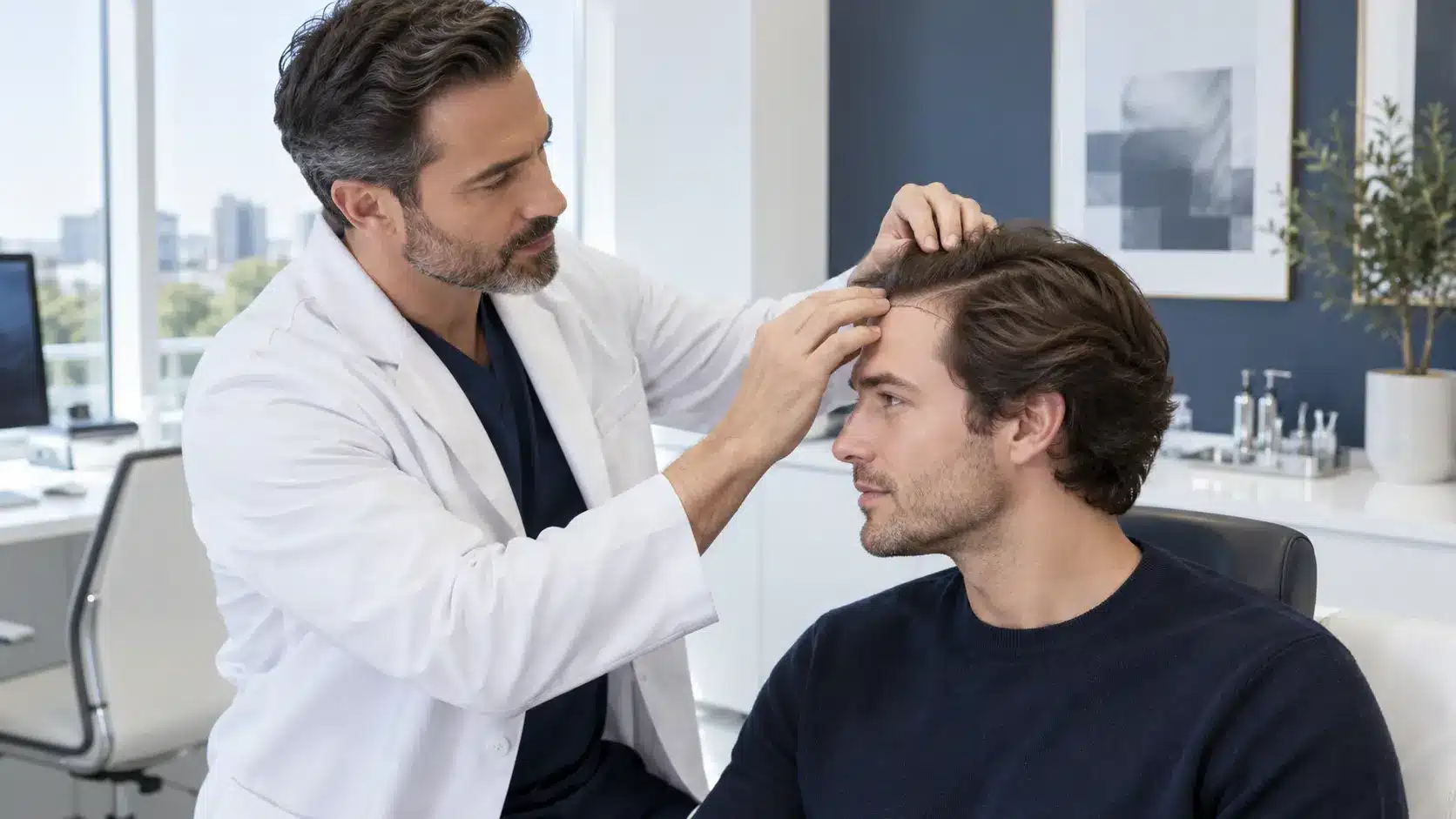
Hair restoration without shaving your entire head
Non-Shave FUE is a variation of Follicular Unit Extraction designed to minimise how much of the existing hair needs to be cut before surgery.
Instead of shaving the entire donor area, selected donor hairs can be shortened individually or in carefully planned sections while surrounding hair remains longer.
This allows the existing hairstyle to help conceal the donor area during the early recovery period.
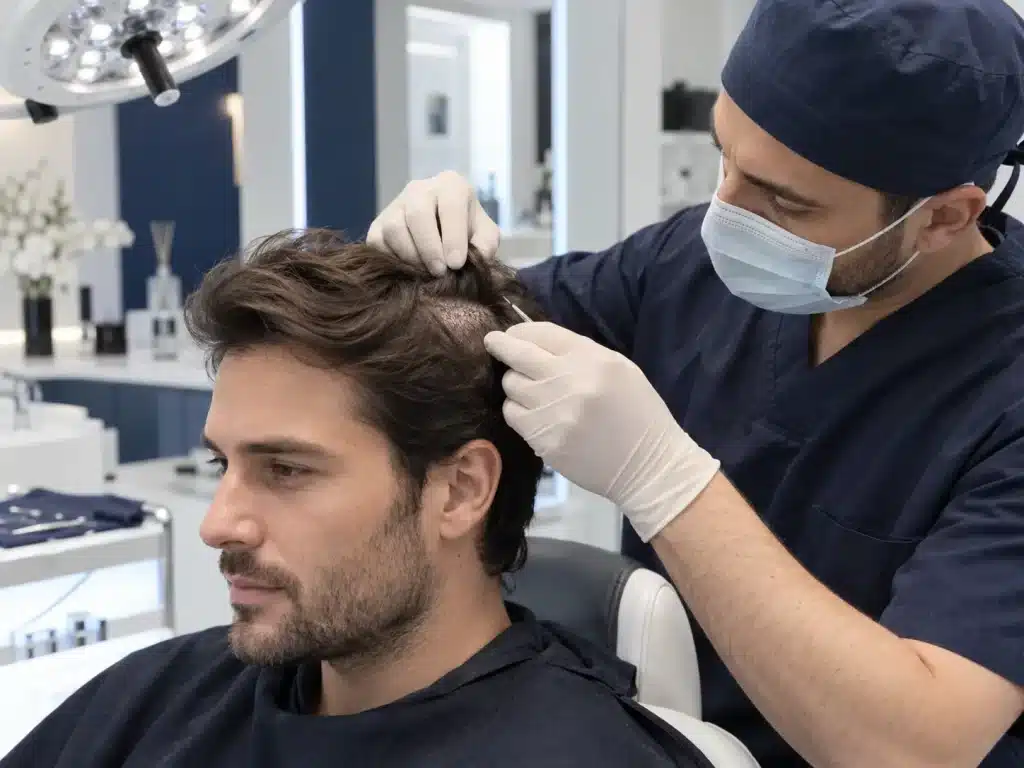
Why patients choose Non-Shave FUE
For many patients, the main concern is not the transplant itself but the visible change caused by shaving the donor area. Non-Shave FUE may make it easier to maintain a familiar appearance while the scalp heals.
Professional Life
Useful for patients who want to return to meetings, client-facing work or professional environments without a fully shaved donor area.
Maintain Your Hairstyle
Longer surrounding hair may help conceal the donor extraction sites during the early healing period.
More Private Recovery
A suitable option for patients who would prefer friends, colleagues or clients not to immediately notice that they have undergone a procedure.
How does Non-Shave FUE work?
1. Consultation
Your hair loss, donor area, hair characteristics and long-term goals are assessed.
2. Donor Preparation
Selected donor hairs are identified and selectively shortened while surrounding hair can remain longer.
3. Extraction & Implantation
Individual follicular units are extracted and implanted according to the planned hairline, direction and density.
4. Aftercare
You receive detailed instructions on how to care for the donor and recipient areas during recovery.
Who may be suitable for Non-Shave FUE?
Non-Shave FUE can be an excellent option for selected patients, but it is not automatically suitable for everyone.
The number of grafts required, donor density, hairstyle, treatment area and long-term hair-loss pattern all need to be considered before deciding on the technique.
It may suit patients with:
- Smaller frontal hairline procedures
- Temple recession
- Public-facing or professional roles
- A preference for a more discreet recovery
- Selected female hair transplant cases
Not every case should be treated without shaving
Conventional shaved FUE may be recommended when a very large number of grafts is required, a larger area needs restoration or donor access would be significantly improved by shaving.
The priority should always be the technique that best protects the donor area and supports a strong long-term result.
Shaved FUE may be preferred when:
- A large number of grafts is required
- A substantial area of the scalp needs restoration
- Extensive crown work is planned
- The surgeon needs broader access to the donor area
Non-Shave FUE for the Hairline
This technique can be particularly suitable for selected frontal hairline and temple procedures where precise restoration is needed without shaving the entire donor area.
Non-Shave FUE for Women
For suitable female patients, preserving the surrounding hairstyle can be especially valuable. Proper diagnosis of the underlying cause of hair loss remains essential.
Does Non-Shave FUE Take Longer?
It can. Working around longer existing hair requires additional planning and careful handling during extraction and implantation.
Why consider Non-Shave FUE?
Greater Discretion
Longer surrounding hair may help conceal the areas where donor follicles have been extracted.
Maintain Your Existing Hairstyle
There is usually no need for the dramatic appearance change associated with completely shaving the donor area.
Natural-Looking Restoration
Individual follicular units can still be positioned according to the planned hairline and natural direction of growth.
Selected Smaller Procedures
The technique can work particularly well where the number of grafts required makes selective donor trimming practical.
Easier Return to Everyday Life
For some patients, retaining their hairstyle can make returning to work and social activities feel more comfortable.
Individual Treatment Planning
The approach is selected according to your donor area, hair loss pattern, graft requirements and long-term objectives.
Recovery
The biological healing process is broadly similar to other FUE procedures. The surrounding longer hair may help conceal the extraction area while it heals.
When Will the Hair Grow?
Some transplanted hairs normally shed during the first weeks. New growth develops progressively over the following months and continues to mature over time.
Non-Shave FUE Cost
Cost depends on the number of grafts, treatment area, donor characteristics, complexity and procedure time. A personalised quotation is provided after assessment.
Compare Non-Shave FUE with Shaved FUE
Our detailed comparison explains the practical differences between shaved and non-shave FUE, including treatment size, recovery and suitability.
Non-Shave FUE FAQs
Is Non-Shave FUE completely unshaven?
Not necessarily. Selected donor hairs or small areas usually need to be shortened so that follicles can be extracted safely. The objective is to avoid shaving the entire donor area.
Can anyone tell that I have had a hair transplant?
The technique can make the donor area easier to conceal, but it cannot guarantee that the procedure will be invisible. Temporary redness, crusting and other normal signs of healing can still occur.
Can I keep my existing hairstyle?
In suitable cases, yes. Preserving the surrounding hair is one of the main reasons patients consider Non-Shave FUE.
Can Non-Shave FUE treat the crown?
Potentially, but larger crown procedures can require substantial graft numbers. In some cases, conventional shaved FUE may be more practical.
Does Non-Shave FUE give better results?
The quality of the outcome depends on patient selection, donor management, hairline planning, graft handling and implantation.
Is Non-Shave FUE suitable for women?
It may be suitable for selected female patients following appropriate assessment of the cause and pattern of hair loss.
Find out whether Non-Shave FUE is suitable for you
Our team can assess your hair loss, donor area, hairstyle and graft requirements before recommending the most appropriate approach.
Dublin • Cork • Tipperary