

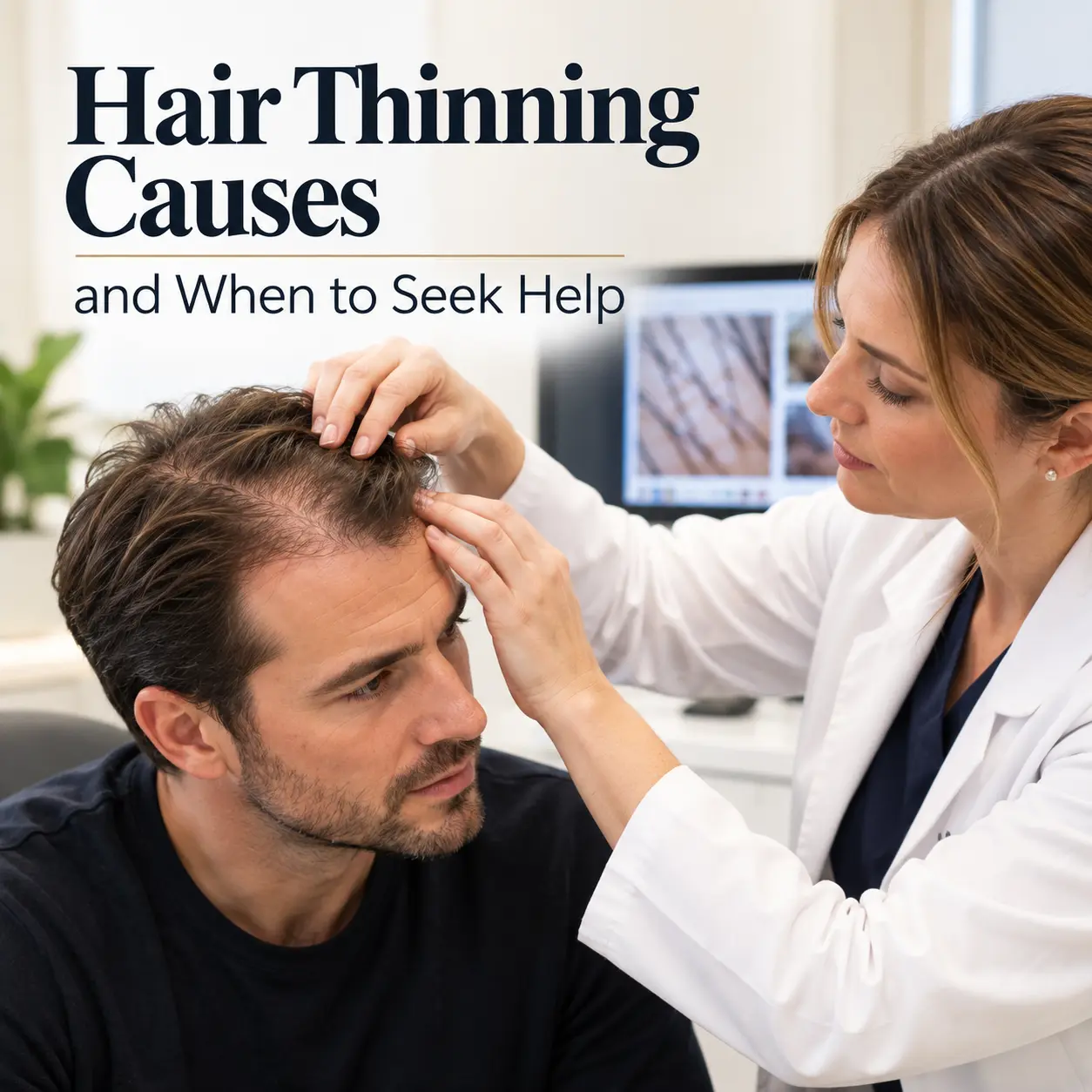
A widening parting, more scalp visible in photographs, or a ponytail that feels noticeably smaller can be unsettling. Hair thinning causes are not always obvious, and the right response depends on whether you are experiencing gradual pattern loss, sudden shedding, breakage, or a change affecting a specific area of the scalp. A medical assessment can separate a temporary trigger from a condition that needs a longer-term treatment plan.
Hair thinning is not always the same as hair shedding
People often use the terms interchangeably, but thinning and shedding can describe different processes. Hair shedding means more hairs than usual enter the resting phase and fall out, often several months after a physical or emotional trigger. This can feel dramatic, but the follicles may remain capable of producing new hair.
Hair thinning more often refers to a gradual reduction in hair density or a decrease in the diameter of individual hairs. In pattern hair loss, genetically sensitive follicles progressively produce finer, shorter hairs. Without appropriate management, this process can continue over time.
The pattern matters. Recession at the temples and crown is common in men, while women may notice a broader central parting or reduced density across the top of the scalp. Diffuse thinning can have several possible causes, which is why a personalised diagnosis matters before choosing a treatment.
The most common hair thinning causes
Genetics and pattern hair loss
Hereditary hair loss is one of the most frequent reasons for gradual thinning in both men and women. It does not always follow the same pattern as a parent or grandparent, and it can begin at different ages within the same family.
In men, androgenetic alopecia commonly presents as a receding hairline, thinning around the crown, or both. In women, female pattern hair loss often appears as a widening parting and diffuse loss of volume across the upper scalp, while the frontal hairline may remain relatively preserved.
Genetics influence how follicles respond to hormones, particularly dihydrotestosterone, known as DHT. Over time, susceptible follicles miniaturise. This is why early assessment can be valuable: treatment may be more effective when there are still active, miniaturising follicles to protect.
Hormonal changes
Hormones can affect the hair growth cycle at many stages of life. Pregnancy can make hair appear fuller for some women, followed by substantial shedding in the months after childbirth. Perimenopause and menopause may also be linked with changes in density, texture and scalp visibility.
Thyroid conditions can contribute to diffuse thinning, as can hormonal conditions associated with altered androgen levels. For some women, a new change in hair density alongside irregular periods, acne or increased facial hair may warrant a discussion with their GP or a relevant medical specialist.
Hormone-related hair loss is not a cosmetic issue to self-diagnose. The appropriate approach depends on the cause, your medical history and whether the hair loss is temporary, progressive or occurring alongside other symptoms.
Stress, illness and major life events
The hair cycle is sensitive to significant physical strain. A high fever, surgery, hospital admission, rapid weight loss, severe infection or a demanding period of stress can trigger telogen effluvium, a form of diffuse shedding. It often becomes noticeable two to three months after the event, which can make the connection difficult to recognise.
In many cases, shedding settles as the body recovers. However, it may persist when the original trigger is ongoing or when it has uncovered underlying pattern hair loss. Continuing to lose hair for more than a few months, or seeing a clear reduction in density, is a good reason to seek a clinical opinion rather than simply waiting it out.
Nutritional deficiency and restrictive dieting
Hair is not essential to immediate survival, so the body may direct nutrients elsewhere during periods of inadequate intake. Low iron stores, vitamin D deficiency, insufficient protein and deficiencies in certain other nutrients can all be relevant in some patients.
Restrictive diets, rapid dieting and poor appetite during illness can contribute to shedding. That said, taking high-dose supplements without evidence of a deficiency is not a reliable solution and can occasionally create other health concerns. Blood tests arranged through your GP or treating clinician can help identify whether a nutritional factor needs to be addressed.
Medication and medical conditions
Some prescription medicines may contribute to shedding or altered hair growth. The effect varies greatly between individuals, and you should never stop prescribed medication because of hair loss without speaking to the doctor who manages your care.
Autoimmune conditions, scalp inflammation and certain skin disorders can also affect the follicles. Patchy loss, itching, scaling, soreness, redness or a burning sensation on the scalp should be assessed promptly. These signs can point to a condition that requires medical treatment rather than a standard hair restoration programme.
Hairstyles, heat and chemical damage
Not every case of apparent thinning begins beneath the scalp. Tight braids, extensions, repeated use of high-tension styles and frequent chemical processing can cause breakage or traction alopecia. The latter results from persistent pulling on the follicles and can become permanent if it continues for too long.
Heat styling and bleaching are more likely to damage the hair shaft than the follicle itself, but extensive breakage can still make the hair look sparse and uneven. Reducing tension, allowing chemically treated hair time to recover and choosing gentler styling practices can make a meaningful difference. If the hairline is changing or the scalp is tender, early advice is especially important.
When is thinning hair worth investigating?
A few hairs on a pillow or in the shower are part of a normal hair cycle. The concern is a visible change from your own usual density, recurring excessive shedding, or a pattern that continues to progress. A professional assessment is particularly useful if you notice sudden patchy loss, scalp discomfort, shedding after illness that does not improve, or thinning accompanied by fatigue, weight change or menstrual changes.
Photographs can be more useful than memory. Taking a clear image of your hairline, parting and crown in similar lighting every month can reveal whether the situation is stable or moving forward. Avoid judging density solely under harsh overhead lighting, which can make even healthy hair appear thinner.
Why a diagnosis should come before treatment
There is no single treatment suitable for every form of thinning. A clinically led consultation should consider your hair-loss pattern, scalp condition, family history, health background, medications and expectations. For some patients, the priority is treating an underlying medical issue or stabilising active shedding. For others, a non-surgical programme may be appropriate to support existing hair.
Where pattern hair loss is established and donor hair is suitable, an FUE hair transplant may be considered as part of a wider plan. It redistributes healthy follicles from the donor area to thinning or bare areas, but it does not stop ongoing loss in untreated native hair. This is why a responsible plan looks beyond the procedure itself, considering future loss, donor supply and long-term naturalness.
Non-shave FUE can be a useful option for patients who want greater discretion around their procedure, although suitability depends on the area being treated, the hair characteristics and the number of grafts required. The best technique is not simply the newest or least visible option. It is the approach that safely supports a realistic, natural-looking result.
At Ailesbury Hair Clinic, assessments are designed to give patients clarity on the likely cause of their concerns and the treatment routes that genuinely fit their situation. That may include medical guidance, non-surgical support, a carefully planned transplant, or reassurance that a surgical procedure is not the right step at present.
A clear next step for changing hair density
Hair thinning can affect confidence long before anyone else notices it. You do not need to wait until the change feels severe to ask for advice, but you also do not need to commit to treatment before you understand what is happening. A considered assessment gives you the evidence, options and timeframe needed to make a decision with confidence.